The profound, lightless depths of our world’s oceans have long captivated the human imagination, representing a frontier more mysterious and less charted than the surface of Mars. In a groundbreaking new study that reads like science fiction, a team of international marine scientists has unveiled a stunning catalogue of previously unknown lifeforms thriving in one of the planet’s most inhospitable realms: the crushing, frigid darkness of the deep-sea floor. This discovery, far from the sun’s life-giving energy, not only redefines the limits of life on Earth but also provides an unprecedented glimpse into the kind of biology we might one day encounter on other worlds. The implications for science, biotechnology, and our understanding of life itself are monumental, offering rich content that captivates readers and search engines alike.
For decades, the deep ocean was considered a biological desert a vast, silent expanse where little could survive under immense pressure and perpetual night. This perception has been utterly overturned. The recent expedition, utilizing state-of-the-art Remotely Operated Vehicles (ROVs) equipped with 4K imaging and delicate sampling arms, targeted the alien landscape of hydrothermal vent fields and cold seeps along the Pacific Ocean’s floor, at depths exceeding 3,000 meters. Here, in the absence of photosynthesis, life has engineered a spectacular and bizarre alternative: chemosynthesis. This process allows organisms to derive energy not from the sun, but from chemical reactions, such as those between seawater and minerals spewing from the Earth’s crust. It is within these oases of chemical energy that researchers have documented an array of creatures so strange they appear extraterrestrial.
A. Detailed Catalogue of the Newly Discovered “Alien” Lifeforms
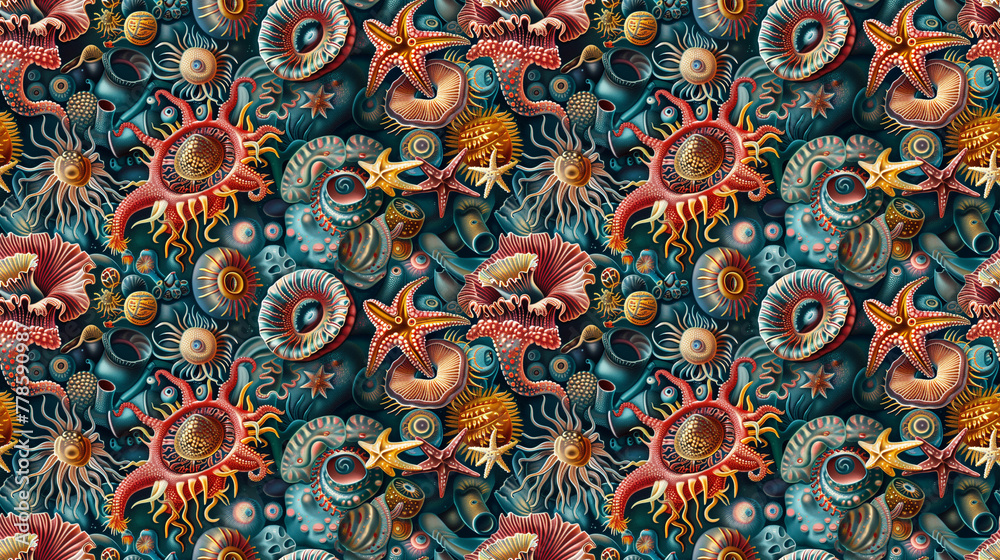
The study’s documentation reveals a bestiary that challenges our terrestrial perspective. Each discovery underscores the incredible adaptability of life.
A. The “Ghost Siphonophore”: This is not a single animal, but a colonial organism a floating city of highly specialized individuals called zooids. Spanning an estimated 40 meters in length, potentially making it one of the longest lifeforms on the planet, its body is ethereally transparent. It drifts like a living net of fine, luminescent threads, using bioluminescent lures to attract prey into its stinging tentacles. Its delicate, glass-like structure is an evolutionary marvel adapted to a low-energy environment.
B. The “Vent Medusa” Jellyfish: Unlike its shallow-water cousins, this jellyfish possesses a unique, hardened, bell-shaped structure rich in minerals, likely for ballast and protection. Its tentacles are hyper-specialized to filter and feed on the dense microbial mats that coat vent chimneys. It pulses slowly through the superheated, mineral-rich plumes, a graceful survivor in a toxic environment.
C. The “Iron-Shelled” Gastropod: This snail has evolved one of the most extraordinary adaptations. It incorporates iron sulfides from vent fluids directly into its shell and scale-covered foot, creating a literal coat of armor. This metallic exoskeleton likely serves as defense against the acidic waters and potential predators, a unique example of biomineralization.
D. The “Blind Scorpion Worm:** A new genus of polychaete worm, this predator is devoid of eyes, instead sporting an array of sophisticated sensory palps on its head to detect vibrations and chemical traces. Its body is covered in iridescent, chitinous plates, and it possesses formidable, scorpion-like pincers for capturing other vent fauna.
E. “Crystalline” Colonial Bacteria: Forming vast, reef-like structures, these microbial colonies precipitate minerals from the vent effluent, creating intricate, crystalline lattices that house entire ecosystems. They are the foundational primary producers of this world, fixing carbon through chemosynthesis and forming the base of a complex food web.
B. The Extreme Ecosystem: A Blueprint for Alien Worlds
The significance of this discovery extends far beyond new species. This ecosystem functions as a precise analog for environments suspected to exist on other celestial bodies.
-
Energy Source Analogy: The chemosynthetic life around hydrothermal vents provides the most compelling model for how life could exist on Europa (moon of Jupiter) or Enceladus (moon of Saturn). These icy moons are believed to harbor global subsurface oceans with hydrothermal activity on their seafloors. The discovery that complex, macroscopic life can thrive in such conditions on Earth boosts the probability of its existence elsewhere.
-
Biochemical Resilience: The enzymes and cellular structures of these organisms operate under extreme pressure, temperature gradients (from 2°C to over 400°C near vent fluids), and high toxicity. Studying their biochemistry could unlock secrets of protein stability and metabolic pathways that are revolutionary for industrial processes and medicine.
-
Evolution in Isolation: These deep-sea vent fields are isolated “islands” on the ocean floor. The unique life forms found at each suggest high rates of endemism and rapid evolution, offering a real-time window into speciation driven by geothermal chemistry rather than solar energy.
C. The Cutting-Edge Technology That Made Discovery Possible
This research was not possible with traditional methods. The expedition leveraged technological marvels:
A. Next-Generation ROVs: Vehicles like SuBastian and Victor 6000 are equipped with precision manipulators, ultra-high-definition cameras with laser scaling, and sensitive environmental sampling suites. They can operate continuously for days at depths impossible for human-occupied submersibles.
B. Environmental DNA (eDNA) Analysis: Scientists filtered seawater samples to capture trace genetic material shed by organisms. This “biological footprint” allowed them to detect the presence of elusive species without ever seeing them, painting a more complete picture of biodiversity.
C. In Situ Sensor Arrays: Networks of sensors placed on the seafloor provide continuous, long-term data on temperature, chemistry, flow rates, and seismic activity, correlating geological events with biological changes.
D. Genomic Sequencing at Sea: Portable lab facilities on the support vessel enabled partial genomic sequencing of samples within hours of collection, allowing for real-time analysis and informed decision-making about where to sample next.
D. Profound Implications for Science and Human Endeavor
The ramifications of these findings are vast and interdisciplinary.
A. Astrobiology’s Terrestrial Benchmark: NASA and other space agencies study these ecosystems intensively. Understanding the limits of life here directly informs the design of instruments for future missions to ocean worlds, telling scientists what biosignatures to look for.
B. Biotechnology Goldmine: Extremophile enzymes (extremozymes) are already revolutionizing industries. The unique proteins from these new lifeforms hold promise for:
* Medicine: New antibiotics, anti-cancer agents, and robust enzymes for diagnostic tests.
* Industrial Processes: Catalysts that work in extreme temperatures and pressures for biofuel production, food processing, and waste degradation.
* Materials Science: Inspiration for new, strong, lightweight materials based on metallic biomineralization.
C. Conservation of the Deep Frontier: As deep-sea mining for polymetallic nodules and rare earth elements advances, this research highlights the incredible, fragile biodiversity at risk. These are not barren wastelands but vibrant, ancient ecosystems that recover slowly, if at all, from disturbance. This study provides critical data for formulating international regulations and protected areas.
D. Redefining the Tree of Life: Each new extremophile discovered, especially in the microbial realm, adds branches to the phylogenetic tree. Some may represent deeply divergent lineages, offering clues about the earliest forms of life on Earth and the very origins of cellular processes.
E. The Unanswered Questions and Future Research Directions

While a milestone, this discovery opens more questions than it answers, charting the course for future exploration.
A. Reproduction and Lifespan: How do these creatures reproduce and disperse across isolated vent fields? Some deep-sea species are known to be incredibly long-lived; what are the lifespans of these new animals?
B. Behavioral Ecology: How do these species interact? What are their predator-prey dynamics, symbiotic relationships, and daily rhythms in a world without day or night?
C. Physiological Limits: Exactly what are the upper thresholds of temperature, pressure, and toxicity they can withstand? Where is the absolute edge of habitability?
D. Climate Connection: Do these deep-sea ecosystems play a previously uncalculated role in global biogeochemical cycles, such as carbon sequestration or regulating ocean chemistry?
In conclusion, the discovery of these alien-like lifeforms in Earth’s deep sea is more than a zoological curiosity; it is a paradigm-shifting event. It forcefully demonstrates that life is not a fragile anomaly but a tenacious force capable of flourishing in the most unimaginable conditions. For scientists, it is a treasure trove of questions and opportunities. For the public, it is a source of wonder that underscores the vast unknowns remaining on our own planet. For the future, it serves as both a warning to tread carefully in these pristine depths and a beacon of hope, suggesting that the universe may indeed be teeming with life, much of it waiting in the dark, heated depths of distant worlds. This ongoing exploration is a testament to human curiosity, reminding us that the final frontier of Earth’s oceans still holds secrets that can redefine our place in the cosmos.