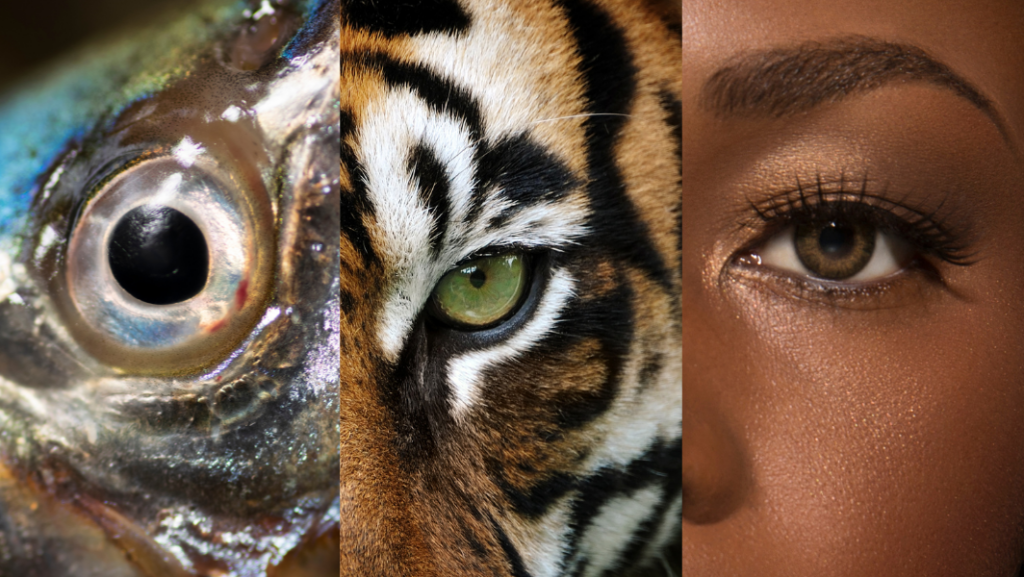
For centuries, the dominant Western philosophical tradition, heavily influenced by thinkers like René Descartes, relegated animals to the status of unfeeling biological automatons mere machines driven by instinct without inner experience. This paradigm provided a convenient ethical buffer, justifying their use solely as resources for human ends. However, a seismic shift is occurring within the halls of modern science. Groundbreaking research across multiple disciplines neuroscience, cognitive ethology, and comparative psychology is converging on a revolutionary consensus: a vast array of animals possess the biological substrates and exhibit the behavioral complexities indicative of sentience and conscious experience. This isn’t merely an incremental discovery; it is a foundational challenge that forces a comprehensive overhaul of our ethical, legal, and economic systems. The evidence for animal sentience no longer lurks at the fringes but commands center stage, demanding we reconfigure our relationship with the non-human world.
Deconstructing Sentience: Beyond Instinct and Reflex
To comprehend the magnitude of this shift, we must first define our terms with precision. Sentience refers to the capacity to have subjective experiences, to feel sensations such as pain, pleasure, fear, and comfort. It is the bedrock of having an interest in one’s own existence. Consciousness, often used interchangeably but more complex, encompasses sentience and adds layers of self-awareness, intentionality, and the ability to form mental representations of the past and future. The scientific quest is not to find a tiny human inside an animal’s brain, but to identify credible markers of these inner states.
The historical view of animals as insentient was less a conclusion drawn from evidence and more an a priori assumption. Descartes’ concept of the “beast-machine” was philosophically tidy but empirically barren. Today, we employ a rigorous, multi-faceted approach to test for sentience, built on what philosophers call the “argument from analogy.” If an animal’s nervous system is analogous to ours in relevant ways, and it responds to stimuli in ways analogous to our conscious responses, the simplest explanation is often that it has analogous experiences. The cumulative evidence from this approach is staggering.
The Empirical Pillars: Evidence for Widespread Sentience
The case for animal sentience is built not on a single experiment, but on a converging network of evidence from diverse fields.
A. Neurological Correlates of Consciousness
The search for the “neural correlates of consciousness” in humans has identified key brain structures and processes. Crucially, many of these are not uniquely human.
-
The presence of a complex central nervous system, including specialized nociceptors (pain receptors) and neural pathways dedicated to processing affective (emotional) experiences, is widespread.
-
Birds, for instance, possess a pallial structure that is functionally analogous to the mammalian neocortex, the seat of higher-order thinking in humans. Research on crows and parrots demonstrates problem-solving, tool use, and social learning rivaling that of great apes.
-
Perhaps most compelling is the discovery that all mammals, birds, and many other vertebrates (like fish) possess a neural architecture for affective consciousness. The midbrain and brainstem structures that generate primal emotional states seeking, fear, rage, lust are evolutionarily ancient and shared.
-
The existence of specialized neurochemicals also tells a story. The presence of endorphins (natural painkillers) and dopamine (reward) systems across the animal kingdom suggests these organisms are not just processing stimuli, but evaluating them as positive or negative a core feature of sentience.
B. Behavioral and Cognitive Complexity
Behavior provides the window into the mind. Observed complexities go far beyond hardwired instinct.
-
Pain and Suffering: Animals do not merely reflexively withdraw from harm. They exhibit pain behaviors that indicate a conscious, negative experience: they learn to avoid places where they were hurt, they nurse injuries, their social behavior changes, and they can be soothed by analgesics (painkillers), which would be meaningless if they were not feeling pain.
-
Emotional States: Documented evidence of joy, grief, fear, and empathy abounds. Elephants perform ritualistic behaviors around the bones of deceased kin, suggesting grief and an awareness of mortality. Rats have been shown to forgo a tasty treat to free a trapped cage-mate, a clear sign of empathic concern. Dogs exhibit unmistakable jealousy and joy.
-
Advanced Cognition: Examples shatter the notion of intelligence as a human monopoly.
-
Episodic-Like Memory: Scrub jays cache food and remember not just where, but what type of food they hid and how long ago a “what-where-when” memory indicative of mental time travel.
-
Theory of Mind: Certain primates, corvids, and even goats appear to understand what others see and know, a foundation for deception and complex social strategizing.
-
Tool Use and Innovation: From orangutans crafting whistles from leaves to octopuses carrying coconut shells for shelter, intentional tool use demonstrates planning and environmental manipulation.
-
C. The Case of the “Simpler” Organisms
The debate intensifies around invertebrates. Yet, the evidence is provocative.
-
Cephalopods (octopuses, squid, cuttlefish) possess highly complex nervous systems with a distributed intelligence. They solve puzzles, use camouflage with artistic flair, and have distinct personalities. The UK and other nations have recognized them as sentient beings in law.
-
Decapod Crustaceans (crabs, lobsters) show prolonged stress responses, memory of pain, and complex avoidance learning. Studies show crabs valuing shelters even after discarding their shells, and hermit crabs making sophisticated, cost-benefit analyses when choosing new homes.
-
Insects, while more contentious, exhibit surprising capacities. Honeybees show pessimism after aggressive encounters a cognitive bias linked to emotional states in mammals. Bumblebees have been documented engaging in what appears to be play, rolling wooden balls for no apparent reward.
The Ethical Imperative: From Exploitation to Moral Consideration
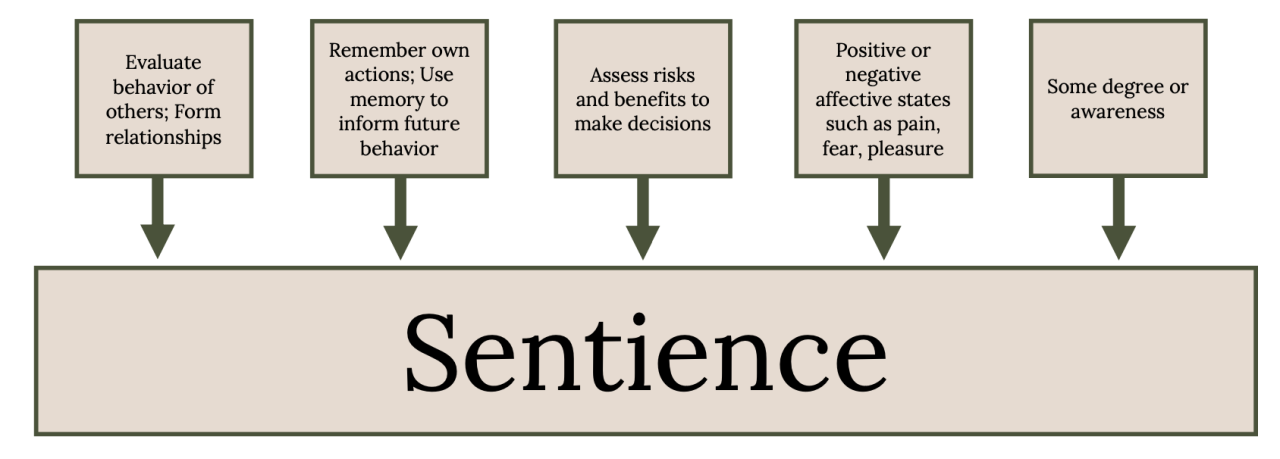
The scientific conclusion that an entity is sentient creates an immediate moral imperative. Sentience grants an individual moral status it becomes a subject of a life whose experiences matter to it. If pain is intrinsically bad for a human, and a pig or a fish possesses the same capacity to experience that badness, then ethically, we cannot discount their pain without committing a grave inconsistency known as speciesism arbitrary discrimination based on species membership alone.
This forces us to overhaul our ethical frameworks in practical, challenging ways:
A. Industrial Animal Agriculture
This is perhaps the most urgent and confronting application. If animals are sentient, then confining sentient beings in conditions that cause chronic stress, physical mutilation without anesthesia, and psychological deprivation for their entire lives is not merely an efficiency issue it is a profound moral crisis. The ethical overhaul demands a move towards:
-
Phasing out the most extreme confinement systems (gestation crates, battery cages).
-
Mandating genuine enrichment that allows for natural behaviors.
-
Seriously investing in and transitioning to alternative proteins (cellular agriculture, plant-based innovations) to reduce reliance on sentient beings as production units.
B. Wildlife Management and Conservation
Ethics extends beyond the farm. Sentience science argues that conservation goals must expand beyond preserving species and biodiversity to consider the welfare of individual wild animals. This raises complex questions about intervention in nature. Should we manage populations through methods that minimize suffering (fertility control vs. culling)? Do we have a duty to alleviate natural suffering where we can, such as during droughts or disease outbreaks? The “hands-off” tradition is challenged by the recognition of individual sentient interests.
C. Scientific Research and Testing
The “Three Rs” (Replacement, Reduction, Refinement) take on new urgency and must be pursued more aggressively. Sentience strengthens the argument for replacing animal models with advanced in vitro and computational methods wherever possible and drastically refining procedures to minimize fear, pain, and distress, recognizing them as real and morally relevant.
D. Legal Personhood and Status
Law has traditionally categorized animals as property. Sentience provides the philosophical foundation for granting them a new legal status not necessarily human-like “personhood,” but as sentient beings with fundamental, legally protected interests in not suffering and in expressing natural behaviors. Nations like New Zealand, France, and the UK have formally recognized animal sentience in law, leading to stronger welfare protections.
Economic and Commercial Realignment: The Sentience-Savvy Market
The ethical shift catalyses an economic one. Consumer awareness of sentience is driving market trends that businesses and content creators (especially those focused on AdSense revenue via SEO) must heed.
A. The Rise of the Ethical Consumer
A growing demographic, particularly among younger generations, makes purchasing decisions based on animal welfare. Products certified as “high-welfare,” “free-range,” “crate-free,” or “animal-friendly” command premium prices and loyalty. Content that educates on these labels, compares ethical brands, and offers guides to compassionate living performs exceptionally well in search engines (“ethical shopping guides,” “cruelty-free products,” “sentience science news”).
B. SEO Opportunities in the Niche
For writers and publishers, this field is rich with high-intent keywords:
-
Informational Queries: “What is animal sentience?”, “Evidence octopus consciousness,” “Are fish sentient?”
-
Commercial Queries: “Best cruelty-free brands,” “Ethical investment funds,” “Plant-based meal plans.”
-
Local Queries: “Animal welfare restaurants near me,” “Adopt a rescue pet [City].”
Creating comprehensive, authoritative content (like this article, exceeding 2000 words) that answers these queries positions a site as a thought leader, driving organic traffic that is valuable for AdSense revenue.
C. Biomimicry and Humane Innovation
Recognizing animal intelligence isn’t just a constraint; it’s a wellspring of inspiration. The field of biomimicry designing solutions modeled on nature relies on respecting and studying animal capabilities. From whale-fin-inspired wind turbines to gecko-foot-adhesive technology, ethical regard for animals can drive sustainable, cutting-edge, and profitable innovation.
Philosophical and Cultural Evolution: A New Story of Kinship

Ultimately, the recognition of animal sentience calls for a deep cultural narrative shift. It moves us from a worldview of human exceptionalism and separation to one of evolutionary kinship and continuum. We are not the sole bearers of consciousness on a planet of automatons. We are, rather, one remarkable expression of a conscious impulse that has evolved in myriad forms.
This is not a call for sentimentalism, but for rational, compassionate stewardship. It asks us to expand our circle of moral concern, to see the world not as a hierarchy with humans at the top, but as a community of sentient beings, each with their own form of subjective experience and interest in flourishing. The science of animal sentience is thus one of the most transformative developments of our age, challenging us to build a more just, empathetic, and truly humane coexistence with the other conscious beings with whom we share our world. The overhaul is not optional; it is the necessary consequence of seeing, finally, what has always been there.