
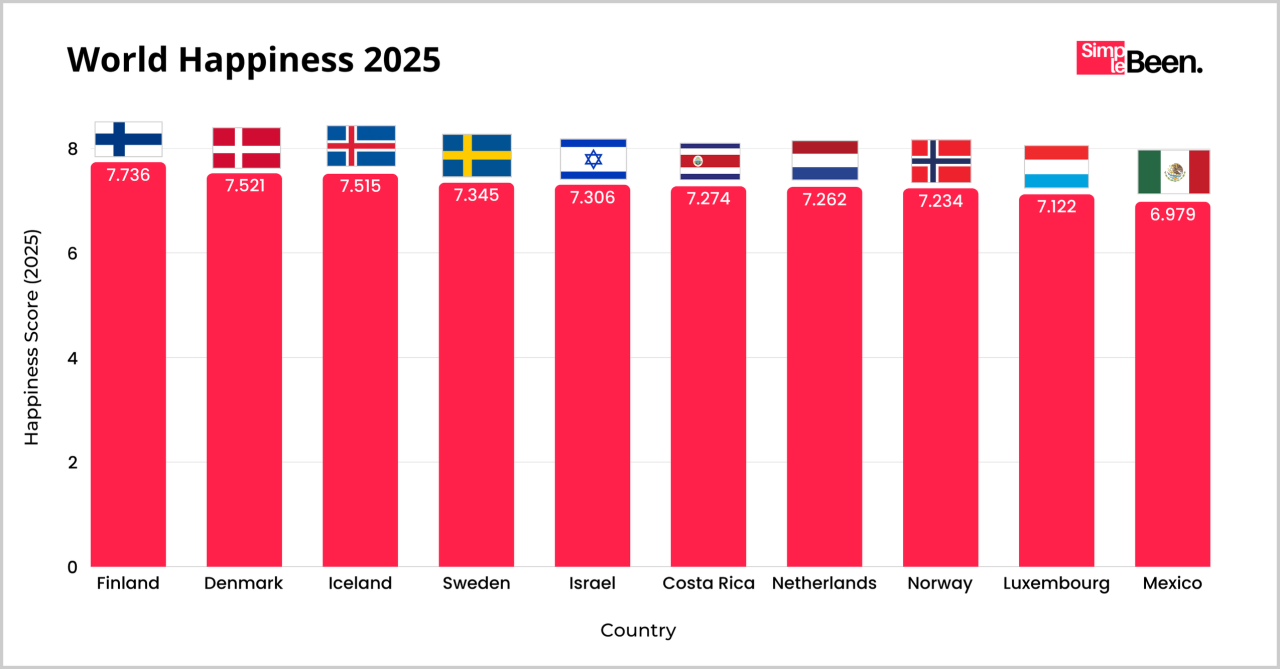
In an era defined by rapid technological advancement and complex societal challenges, the pursuit of happiness remains a fundamental human goal. The annual release of the World Happiness Report, a comprehensive global happiness study, has become a pivotal event, offering more than just a simple ranking. It provides a profound, data-driven snapshot of the state of human well-being across the planet. This meticulously researched report goes beyond superficial metrics, delving into the core factors that make life not just livable, but truly fulfilling. For nations, policymakers, and individuals alike, understanding these findings is crucial for shaping a better future. This in-depth analysis will not only reveal the current top-ranking country but will also explore the intricate methodology, the key pillars of national happiness, the stories of leading and lagging nations, and the powerful implications for global policy and individual life choices. In a digital age where content drives discourse, grasping the nuances of global happiness is essential for fostering informed conversations and meaningful progress.
A. The Methodology: How Happiness is Measured on a Global Scale
The credibility of the World Happiness Report stems from its rigorous and transparent methodology. It is not based on vague impressions but on robust, large-scale data analysis.
A. Primary Data Source: The Gallup World Poll: The cornerstone of the report is the Gallup World Poll, which surveys thousands of individuals in over 140 countries. The key question asks respondents to evaluate their current life on a scale from 0 to 10, known as the Cantril Ladder, where 0 represents the worst possible life and 10 the best possible life.
B. The Six Key Explanatory Variables: National average life evaluations are then explained through six fundamental variables, each supported by extensive data:
1. GDP per Capita: A measure of economic output per person, indicating the level of economic resources available.
2. Social Support: This is assessed by asking whether individuals have someone to count on in times of trouble.
3. Healthy Life Expectancy: The number of years a newborn can expect to live in good health, based on data from the World Health Organization.
4. Freedom to Make Life Choices: The perceived ability of individuals to make autonomous decisions about their lives.
5. Generosity: Measured by whether respondents have donated to charity in the past month.
6. Perceptions of Corruption: This captures views on corruption within both business and government.
C. The Dystopia Comparison: Researchers use a hypothetical “Dystopia” country the lowest national averages for each of the six factors as a benchmark. The extent to which a country outperforms this dystopian baseline determines its final score. This approach allows for a clear, comparative analysis of positive achievement.
B. The Reigning Champion: A Deep Dive into the Top-Ranking Nation
Consistently, Nordic nations have dominated the upper echelons of the happiness rankings. In recent years, Finland has secured the top position repeatedly, a feat that invites deep exploration beyond its cold climate.
A. The Foundation of Trust: Finnish society is built upon an exceptionally high level of trust. Citizens trust their government institutions, the police, the education system, and, crucially, each other. This pervasive trust reduces social friction, anxiety, and transaction costs in daily life, creating a secure and predictable environment.
B. The Role of Comprehensive Social Welfare: Finland’s robust social safety net including universal healthcare, high-quality education (from early childhood through university), unemployment benefits, and strong parental leave policies effectively cushions citizens against life’s misfortunes. This system alleviates the profound stress associated with health crises, job loss, and family care.
C. Embracing Nature and “Sisu”: The Finnish concept of “Everyman’s Right” allows everyone to freely roam and forage in nature, promoting physical and mental well-being. Coupled with “sisu,” a cultural idea of resilience, grit, and perseverance, Finns possess a psychological toolkit for coping with adversity, which positively impacts their life evaluation.
D. Balanced Work-Life Culture: Finnish workplaces typically emphasize productivity within reasonable hours, discouraging the culture of burnout. Ample vacation time and a focus on efficiency over long hours contribute significantly to overall life satisfaction and family harmony.
C. The Consistent Contenders: The Nordic Model and Its Global Lessons
Finland does not stand alone. Its neighbors Denmark, Iceland, Sweden, and Norway perennially rank in the top ten, showcasing the effectiveness of the “Nordic Model.”
A. The Triad of Success: This model is characterized by a powerful triad: a dynamic capitalist economy that generates wealth, an extensive welfare state that redistributes it and ensures security, and a high-trust civil society that fosters cooperation. These elements work in a synergistic cycle.
B. Economic Security vs. Unbridled Capitalism: While these nations have high taxes, citizens perceive clear value in return: free education, healthcare, and social benefits. This trade-off results in lower income inequality, less financial anxiety, and a stronger sense of communal solidarity.
C. The Equality Advantage: High levels of gender equality, income equality, and social mobility are hallmarks. When people feel they have a fair chance and are not judged by their background, societal resentment decreases, and collective happiness increases.
D. The Other End of the Spectrum: Understanding Nations with Lower Happiness Scores
The report also highlights nations facing significant challenges, often those afflicted by conflict, extreme poverty, institutional failure, or political turmoil.
A. The Impact of Conflict and Instability: Countries like Afghanistan, which often ranks at the bottom, suffer from decades of war, terrorism, and political instability. This destroys infrastructure, erodes social fabric, and creates an environment of constant fear and uncertainty, making higher-order needs for happiness impossible to meet.
B. The Burden of Poverty and Weak Institutions: In some nations, low GDP per capita is compounded by weak governance, corruption, and poor public services. Even if social support within families is strong, the lack of basic economic opportunities and reliable institutions severely depresses life evaluations.
C. The Misery of Corruption: Widespread corruption is a major happiness killer. It erodes public trust, creates injustice, and diverts resources away from public goods like healthcare and education, leading to cynicism and helplessness among the populace.
E. Global Trends and Surprising Insights from the Latest Data
The annual report reveals evolving trends that challenge stereotypes and offer new perspectives.
A. The Age and Generational Happiness Gap: Research consistently shows that life satisfaction often follows a U-curve, dipping in mid-life and rising in older age. Furthermore, in many Western nations, younger generations are reporting lower happiness levels than older generations did at the same age, a trend linked to digital saturation, economic pressures, and climate anxiety.
B. The Benevolence of Generosity: The generosity variable proves that prosocial behavior giving to others is strongly correlated with personal happiness. This reinforces psychological findings that altruism activates brain regions associated with pleasure, creating a virtuous cycle.
C. The Paramount Importance of Social Connection: During global crises like the COVID-19 pandemic, the critical role of social support became overwhelmingly clear. Nations and communities with stronger social cohesion demonstrated greater resilience in well-being, underscoring that relationships are a more potent predictor of happiness than income alone.
F. Criticisms and Limitations of the Happiness Index
While invaluable, the World Happiness Report is not without its critics. A comprehensive understanding requires acknowledging its limitations.
A. Cultural Bias in Defining Happiness: The concept of happiness is culturally nuanced. The ladder-of-life evaluation may align with individualistic Western cultures but might not perfectly capture conceptions of well-being in more collectivist societies, where family or community harmony might be prioritized over individual satisfaction.
B. The Oversimplification of a Complex State: Reducing happiness to a single number on a scale inevitably simplifies a multifaceted emotional and psychological state. It may not fully account for transient moods, deep-seated contentment, or existential fulfillment.
C. Data Collection Challenges: In nations with low literacy, political repression, or ongoing conflict, collecting accurate, representative survey data is inherently difficult, which may affect the precision of scores for some countries.
G. Practical Applications: From National Policy to Personal Fulfillment
The insights from global happiness research are not merely academic; they have real-world applications at both macro and micro levels.
A. Policy Implications: Beyond GDP: Progressive governments are now looking to “GNH” (Gross National Happiness) or well-being budgets as complements to GDP. Investing in mental health services, green spaces, community programs, and anti-corruption measures are direct policy outcomes inspired by happiness research.
B. Corporate and Organizational Strategy: Forward-thinking companies use these principles to design workplaces that foster autonomy, purpose, and camaraderie key drivers of employee satisfaction and productivity, proving that happy employees are often more engaged and innovative.
C. Individual Life Lessons: On a personal level, the report’s findings offer evidence-based guidance for a happier life:
1. Nurture Your Relationships: Invest time and energy in building and maintaining strong social connections.
2. Seek Purpose, Not Just Pleasure: Engage in activities that provide a sense of meaning, whether through work, volunteering, or hobbies.
3. Practice Generosity: Regularly give your time, resources, or attention to others.
4. Prioritize Freedom and Autonomy: Make life choices that align with your personal values, even in small ways.
5. Live in a Society That Aligns with Your Values: While moving countries is a major step, choosing communities and social circles that reflect these happiness factors can have a significant impact.
Conclusion: The Enduring Quest for a Happier World
The Global Happiness Report does more than name a top country; it provides a compass for humanity’s shared aspiration for a better life. Finland’s and the Nordic region’s success stories illustrate that happiness is a societal project, built on trust, equity, and a balance between individual freedom and collective security. Conversely, the struggles at the lower end of the ranking serve as a sobering reminder of the devastating costs of war, poverty, and corruption. As the world grapples with interconnected crises, from climate change to geopolitical strife, the report’s core message is clear: policies and personal choices that strengthen social fabric, ensure equitable opportunities, and foster resilience are not soft ideals but fundamental necessities for sustainable development and human flourishing. The pursuit of happiness, therefore, is both a deeply personal journey and a collective responsibility, with data as our guide.