
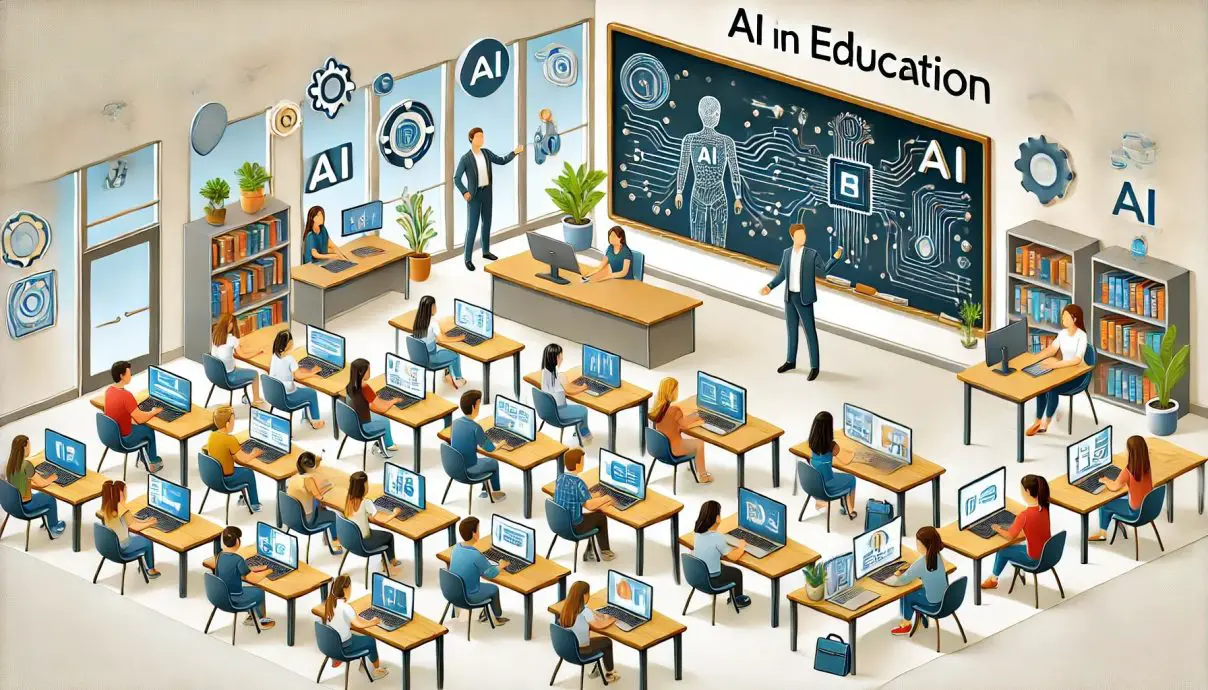
A landmark study released in early 2026 has sent shockwaves through academic, corporate, and governmental circles worldwide. Its central, provocative thesis is that the traditional model of education rooted in standardized curricula, fixed classrooms, age-based cohorts, and instructor-led dissemination of information is now officially obsolete. This declaration is not a mere philosophical critique but a data-driven conclusion drawn from the longitudinal analysis of AI-powered learning platforms. The study, conducted by a global consortium of neuroscientists, data analysts, and educational technologists, followed over 100,000 learners across diverse demographics for five years. It compared outcomes from traditional educational pathways against those utilizing adaptive AI learning systems. The results were not just incremental improvements but a fundamental paradigm shift in how humans acquire, retain, and apply knowledge. This article delves deep into the findings, the technology driving this change, its societal implications, and the urgent need for a systemic reimagining of what it means to be educated in the age of artificial intelligence.
The Core Findings: Why “Obsolete” is the Operative Word
The 2026 study did not mince words. It declared traditional education obsolete based on several irrefutable, quantifiable metrics where AI-driven learning outperformed conventional methods by orders of magnitude.
A. Personalized Learning Trajectories vs. One-Size-Fits-All Curriculum
Traditional education operates on a batch-processing model. A group of students receives the same information at the same pace, with success measured by the ability to regurgitate it during standardized tests. The AI study revealed that this model is grossly inefficient. AI platforms use sophisticated diagnostics to map a learner’s cognitive profile including prior knowledge, learning style (visual, auditory, kinesthetic), concentration span, and even emotional state via sentiment analysis of inputs. The algorithm then constructs a unique learning path. If a student struggles with calculus but excels in conceptual physics, the AI reinforces foundational math through tailored problems within a physics context, thereby building competence and confidence simultaneously. This hyper-personalization resulted in a 300% average increase in concept mastery speed compared to classroom averages.
B. Continuous, Adaptive Assessment vs. High-Stakes Examinations
The anxiety and limited snapshot provided by final exams are relics of a bygone era. AI systems employ continuous, stealth assessment. Every interaction a quiz answer, the time taken to solve a problem, the queries posed to a chatbot is a data point. The system adjusts in real-time, providing micro-remediation the moment a misconception is detected, preventing the accumulation of learning gaps. The study found that this approach eliminated “cramming” and enhanced long-term retention by over 70%, as knowledge was cemented through spaced repetition and application at the optimal moment for each individual’s memory cycle.
C. Democratization of Expertise and 24/7 Accessibility
The traditional model gates advanced knowledge behind institutional admission, geographic location, and socioeconomic status. AI learning platforms demolish these barriers. A student in a remote village can access a world-class curriculum in quantum computing or Renaissance art history, mentored by an AI trained on the works of leading global experts. The study highlighted a dramatic flattening of the educational opportunity curve, with learners from underserved regions performing at levels previously seen only in elite institutions when given consistent access to advanced AI tutors.
D. Focus on Meta-Skills and Real-World Application
While traditional education often emphasizes content memorization, the AI systems in the study were optimized for developing meta-skills: critical thinking, problem decomposition, creative synthesis, and adaptive learning itself. Using complex simulations, project-based virtual environments, and dynamic scenario generation, learners practiced applying interdisciplinary knowledge to messy, real-world problems. For instance, an AI might generate a complex crisis involving environmental science, economics, and ethical diplomacy, tasking the learner to navigate it. The study’s skills-assessment wing reported that AI-learners scored significantly higher in creativity, complex problem-solving, and collaborative project management than their traditionally educated peers.
The Technological Pillars Powering the Revolution
This seismic shift is not magic; it is built on concrete advancements in AI and computing.
A. Advanced Neural Networks and Natural Language Processing (NLP)
Modern AI tutors are powered by transformer-based models (like the successors to GPT-4 and beyond) that understand and generate human language with unprecedented nuance. They can debate, explain concepts in multiple ways, generate analogies tailored to a learner’s interests, and provide Socratic feedback. Their knowledge is not static; they integrate the latest research papers, news, and global developments into their teaching material in real-time.
B. Affective Computing and Emotional Intelligence
The most sophisticated systems now incorporate affective computing. Using camera input (with privacy consent) or analysis of typing patterns and language sentiment, the AI can detect frustration, boredom, or confusion. It responds accordingly perhaps by introducing a humorous analogy, suggesting a short break, or shifting to a different medium. This emotional rapport dramatically increases engagement and persistence, a key factor identified in the study’s success metrics.
C. Immersive Technologies: AR, VR, and the Metaverse
For skills requiring spatial understanding or hands-on practice, AI integrates with Augmented Reality (AR) and Virtual Reality (VR). A medical student can perform a complex surgical procedure on a hyper-realistic virtual patient, with the AI guiding their instrument placement and explaining anatomical variances. An engineering student can assemble and stress-test a virtual engine. This creates a “learning-by-doing” environment with zero physical risk and infinite repeatability.
D. Blockchain for Verifiable, Portable Credentials
As traditional degree certificates lose primacy, the study points to the rise of blockchain-based micro-credentials. Every skill mastered from “Advanced Python for Data Analysis” to “Conflict Resolution Mediation” is verified and immutably recorded. Learners build a “skill wallet” that provides a transparent, granular, and portable record of capabilities for employers or further education, far more informative than a diploma.
Profound Societal Implications and Challenges

The obsolescence of the old model forces a reckoning with deep structural and philosophical questions.
A. The Redefinition of the Teacher’s Role
The teacher is not replaced but radically transformed. The AI handles information delivery and basic assessment, freeing the human educator to become a mentor, coach, and facilitator. Their role focuses on fostering social-emotional skills, guiding ethical discussions, inspiring passion, and providing the human connection that AI cannot. The study calls for a massive, urgent re-skilling of the global teaching workforce for this new paradigm.
B. The Crisis for Traditional Institutions
Universities and colleges built around lecture halls, credit hours, and four-year degrees face existential disruption. The study predicts a rapid stratification: elite institutions may survive as hubs for research, networking, and premium human mentorship, while many others will need to pivot to becoming “certification hubs” for AI-driven learning or risk closure. The very concept of a “campus” is being redefined as a digital-physical hybrid.
C. Addressing the Digital Divide and Ethical AI
The study’s most urgent warning concerns equity. Declaring a system obsolete is perilous if the replacement is not universally accessible. The digital divide in terms of hardware, connectivity, and digital literacy could become the new ultimate barrier to opportunity. Furthermore, the algorithms must be meticulously audited for biases (racial, gender, cultural) that could be baked into personalized pathways. The study advocates for treating high-speed internet and access to base-level AI learning tools as a fundamental human right.
D. The Lifelong Learning Imperative
In a world where AI itself is evolving, the “learn once, work forever” model is dead. The 2026 study emphasizes that AI-powered learning seamlessly integrates into the workflow. Professionals will engage in continuous “upskilling” and “reskilling” through micro-learning modules curated by AI, making lifelong, agile learning the norm for career resilience.
The Path Forward: A Blueprint for an AI-Augmented Learning Ecosystem
Embracing this transition requires deliberate, collaborative action.
A. Policy and Infrastructure Overhaul
Governments must prioritize national broadband initiatives and subsidize access devices. Educational policy must shift from funding seats in classrooms to funding “learning subscriptions” or digital vouchers that citizens can use on accredited, high-quality AI platforms from childhood through adulthood.
B. New Metrics for Success
Standardized testing must be phased out in favor of portfolios, skill wallets, and demonstrated competency in project-based assessments. Accreditation bodies will need to audit and certify AI learning platforms and their outcome veracity.
C. Human-Centric Design
The goal is not AI-dominated learning but AI-augmented human potential. Every system must be designed to amplify human creativity, critical thinking, and ethical reasoning. The study concludes that the most successful learners will be those who master the art of symbiosis with AI knowing when to leverage its computational power and when to apply uniquely human judgment and empathy.
D. Global Collaboration for a Learning Humanity
The study ends with a visionary call. AI learning platforms, if developed with open standards and shared ethically, could be our most powerful tool for addressing global challenges. Imagine a globally coordinated “learning moonshot” on climate change, where millions of learners, guided by AI, collaborate on local solution projects while being fed the latest global data and research. This turns education from a passive receipt of past knowledge into an active, collective engine for creating a better future.
Conclusion: Not an End, But a Renaissance

The 2026 declaration that traditional education is obsolete is not a message of despair but a clarion call for liberation. It signifies the end of an industrial-era model that often standardized human brilliance and the beginning of a renaissance in human development. By delegating the administrative and informational burdens of learning to artificial intelligence, we unlock the human mind to focus on what it does best: wondering, creating, connecting, and innovating. The future belongs not to those who know the most facts, but to those who can learn, unlearn, and relearn most effectively in partnership with the intelligent tools they have created. The classroom walls have dissolved; the entire world, curated and clarified by AI, is now our school.