
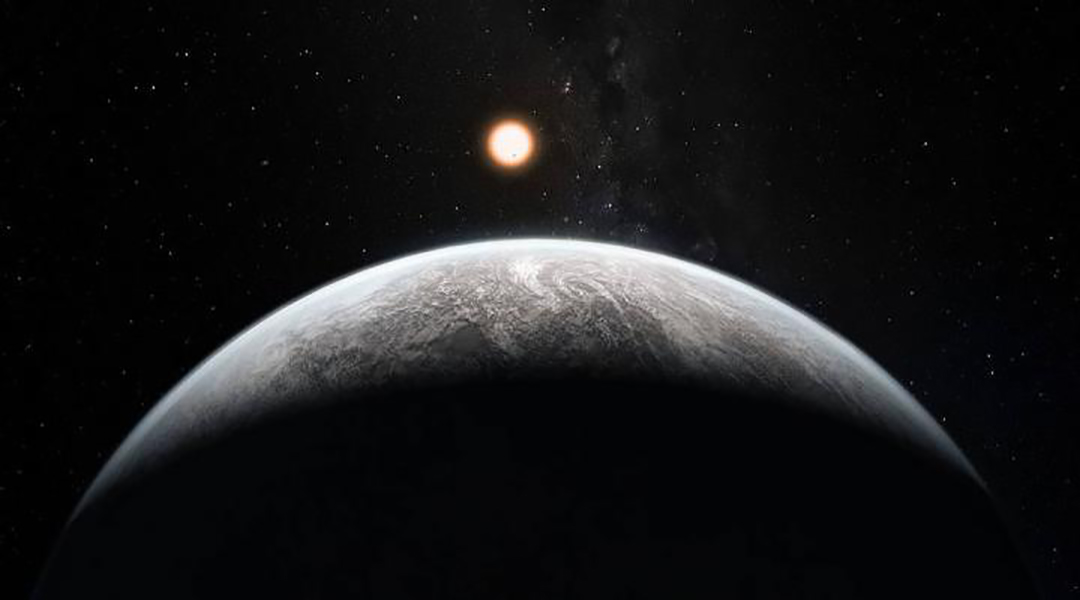
For millennia, humanity has gazed at the stars, wondering if we are alone in the cosmos. Today, we stand on the precipice of answering that profound question, not through radio signals or alien artifacts, but by deciphering the very air of distant worlds. The study of exoplanet atmospheres has rapidly evolved from a theoretical fantasy into the most promising frontier in the search for life beyond Earth. This discipline moves us beyond merely counting planets to intimately analyzing their chemical compositions, weather patterns, and potential to harbor biology. Recent breakthroughs, particularly from instruments like the James Webb Space Telescope (JWST), are transforming speculative science into tangible, data-driven investigation. This comprehensive analysis delves deep into the methodologies, landmark discoveries, challenges, and future prospects of this exhilarating field, exploring how the subtle whispers of atmospheric gases may soon herald the most monumental discovery in human history: that we are not alone.
The Foundational Science: How We Sniff Alien Air
Analyzing the atmosphere of a world light-years away is an extraordinary feat of engineering and inference. Scientists primarily rely on a technique called transmission spectroscopy. When an exoplanet transits, or passes in front of its host star from our viewpoint, a fraction of the star’s light filters through the planet’s atmospheric rim. Different molecules in this atmospheric blanket absorb specific wavelengths of this starlight. By meticulously dissecting the combined starlight before, during, and after the transit using a spectrograph, astronomers can identify the unique absorption fingerprints of atoms and molecules. This data manifests as a transmission spectrum a graph that is, in essence, a chemical barcode for an alien sky.
A secondary method, emission spectroscopy, analyzes the infrared light emitted directly by the planet itself. As planets are heated by their star, they radiate thermal energy. The atmosphere imprints its signature on this radiation, allowing for complementary compositional studies. These techniques demand extreme precision, as the atmospheric signal is often less than one percent of the star’s total light. The advent of JWST, with its unparalleled infrared sensitivity and stable optics, has thus revolutionized the field, allowing for atmospheric characterization of smaller, rocky planets previously beyond our reach.
Biosignatures: The Chemical Hallmarks of Life
The core objective of atmospheric study is the search for biosignatures: chemical compounds or combinations thereof that suggest biological processes. It is critical to understand that a biosignature is not a definitive proof of life, but a compelling signpost that demands further investigation and ruling out of abiotic (non-living) explanations.
A. The Primary Candidate: Oxygen and Ozone
On Earth, the abundant molecular oxygen (O₂) and its photochemical byproduct, ozone (O₃), are direct products of photosynthesis. A significant, sustained presence of O₂ in an exoplanet’s atmosphere, especially alongside other suggestive gases, is a prime biosignature. However, caution is essential. Oxygen can also accumulate abiotically through photolysis (sunlight splitting water vapor) or from a runaway greenhouse effect on a dying ocean world. The context such as planetary type and stellar activity is paramount.
B. The Methane Paradox
Methane (CH₄) is a simple organic molecule readily produced by biological activity (e.g., methanogens). On a temperate, rocky planet, methane is relatively unstable and should be chemically broken down within centuries. Therefore, a substantial, replenishing methane abundance suggests an active source. The simultaneous detection of both methane and oxygen is considered an especially powerful biosignature, as these gases rapidly react with each other (in what is called a redox disequilibrium). Maintaining both requires continuous, massive production from opposing sources a scenario most easily explained by biology.
C. Complex “Technosignatures”
Beyond natural biology, scientists also consider technosignatures markers of advanced technology. These could include artificial pollutants like chlorofluorocarbons (CFCs), industrial byproducts like nitrogen dioxide, or even an inexplicable abundance of laser or radio signals. While speculative, their inclusion broadens the search parameters.
D. The Imperative of Context and False Positives
A true biosignature assessment is holistic. Scientists must consider the entire planetary system to avoid “false positives.” For instance:
-
The Host Star: The star’s type, UV flux, and activity level dramatically influence atmospheric chemistry.
-
Planetary Geology: Volcanic outgassing can produce CO₂, CH₄, and even O₂ under certain conditions.
-
Planetary Class: Is it a rocky terrestrial world, a mini-Neptune, or a lava planet? The surface conditions dictate what is plausible.
-
Atmospheric Stability: Is the atmospheric composition stable over geological timescales, or is it in a transient state?
The goal is to identify a biosignature within a compelling environmental context a planet in the star’s habitable zone, with liquid water potential, sporting an atmosphere in a persistent chemical disequilibrium that points towards metabolism.
Case Studies: Decoding Real Alien Atmospheres
Recent years have yielded tantalizing, though not yet conclusive, case studies that illustrate the power and complexity of this search.
A. K2-18 b: The Hycean World Hypothesis
This exoplanet, a “sub-Neptune” or “super-Earth” about 120 light-years away, made headlines when JWST data revealed the clear presence of water vapor, methane, and carbon dioxide in its atmosphere and a tentative, debated hint of dimethyl sulfide (DMS). On Earth, DMS is produced almost exclusively by marine phytoplankton. K2-18 b orbits within its star’s habitable zone and is hypothesized to be a “Hycean” world: a planet with a vast, hot global ocean beneath a hydrogen-rich atmosphere. The detection of multiple carbon-bearing molecules suggests an active carbon cycle, while the potential DMS signal, if confirmed by further observations, would catapult this world to the top of the list for biological potential. It showcases the need to consider exotic, non-Earth-like habitats for life.
B. TRAPPIST-1 System: The Rocky Planet Bonanza
This ultracool dwarf star hosts seven Earth-sized planets, several within its habitable zone. JWST has begun atmospheric surveys of these worlds, notably TRAPPIST-1 b and c. Initial findings suggest they likely have thin, cloud-free atmospheres, possibly depleted or lacking thick atmospheres dominated by hydrogen. For TRAPPIST-1 e, f, and g the most promising for habitability the search is ongoing. This system represents the best chance to study comparative atmospheres of multiple temperate, rocky planets around the same star, a laboratory for understanding atmospheric evolution and potential biosignature divergence.
C. The Lessons from Our Solar System: Venus and Mars
Our cosmic backyard provides critical cautionary tales. Venus shows a runaway greenhouse with a thick CO₂ atmosphere, while Mars has a thin CO₂ atmosphere with seasonal methane spikes that remain enigmatic but are likely geochemical. Neither show clear biosignatures, yet both have been speculated as past abodes for life. They remind us that atmospheric evolution is complex and that the absence of an Earth-like biosignature does not definitively rule out life, especially in the past or in subsurface niches.
The Formidable Challenges in the Hunt
The path to a definitive discovery is fraught with immense technical and interpretive hurdles.
A. The Stellar Noise Problem
A star’s own activity flares, starspots, and pulsations can create spectral variations that mimic or obscure planetary atmospheric signals. Disentangling the planet’s tiny fingerprint from the star’s overwhelming “noise” is a monumental data-processing challenge.
B. Cloud and Haze Complications
High-altitude clouds or photochemical hazes can blanket a planet’s atmosphere, obscuring the deeper layers where biosignature gases might be most prominent. This can flat-line a transmission spectrum, making even a rich atmosphere appear bland and featureless.
C. The “M-Earth” Dilemma and Time Constraints
Most potentially habitable planets orbit smaller, cooler M-dwarf stars. These stars are volatile, with fierce flares that could strip atmospheres over time. Furthermore, such planets are often tidally locked, with permanent day and night sides, leading to extreme weather patterns. Observing them also requires intense telescope time; a single transit of a habitable zone planet can take hours, and dozens of transits may be needed for a robust signal, stretching across years.
D. The Interpretation Abyss
Even with a perfect spectrum, interpretation is model-dependent. Our models of atmospheric chemistry and planetary evolution are based on a single data point: Earth. The discovery of a truly alien biosphere might challenge all our preconceptions, requiring us to recognize the unfamiliar.
The Future: Next-Generation Tools and the Road to Discovery
The quest is accelerating with a new arsenal of tools and missions.
A. The James Webb Space Telescope’s Ongoing Reign
JWST is currently the workhorse, with years of planned observations for exoplanet atmospheres. Its ability to characterize smaller, cooler planets will generate the foundational datasets for the next decade.
B. Upcoming Ground-Based Behemoths
The Extremely Large Telescope (ELT), Giant Magellan Telescope (GMT), and Thirty Meter Telescope (TMT), when operational later this decade, will use colossal mirrors to gather unprecedented light. Equipped with advanced adaptive optics and spectrographs, they will directly image giant exoplanets and potentially analyze the atmospheres of nearby Earth-like worlds through reflected light.
C. The Next Frontier in Space: Habitable Worlds Observatory
NASA’s concept for a flagship mission, the Habitable Worlds Observatory (HWO), is designed as a direct-imaging space telescope with a coronagraph or starshade to block stellar glare. Its explicit goal is to obtain the first high-contrast images and spectra of at least 25 potentially Earth-like worlds, searching for evidence of habitability and biosignatures. This represents the logical, ambitious next step towards a potential discovery.
D. The Role of AI and Machine Learning
The vast, complex datasets demand advanced algorithms. AI is being used to sift through stellar noise, model millions of potential atmospheric scenarios, and identify subtle, anomalous spectral patterns that human analysts might miss.
Conclusion: The Breath of Worlds and the Human Spirit
The study of exoplanet atmospheres is more than a technical pursuit; it is a profound philosophical and scientific journey to understand our place in the universe. Each spectrum we capture is a breath from a distant world, a story written in light and chemistry. We are learning to read these stories. While a conclusive detection of life may still be years or even a generation away, every observation refines our search, sharpens our questions, and brings us closer to that epochal moment. The endeavor teaches us not only about other planets but also about the fragility and uniqueness of our own biosphere. As we peer into the alien skies of K2-18 b, TRAPPIST-1 e, and countless worlds yet unnamed, we are ultimately seeking a reflection or a radical contrast to the beautiful, life-filled pale blue dot we call home. The search itself, this collective act of cosmic curiosity, is a testament to the enduring human desire to explore, to know, and to connect. The answer, hidden in the delicate spectral lines of distant atmospheres, awaits.